What is biodiversity and why is it important?
Biodiversity refers to the variety of living species on Earth, including plants, animals, bacteria, and fungi. Biodiversity is one of the most important and yet often underappreciated facets of life on planet earth. The diversity of life across the planet is staggering and of incredible importance to our continued prosperity as a species. We rely on the products of nature and the “natural capital” such as clean air and water, soils for agriculture as well as the crops themselves, medicines, mental and physical health, recreation, and much more. Biodiversity often finds itself under pressure from many aspects of modern life and industry. Recognition of the threats that our biodiversity is under and the need to respond to it has led to increased awareness and need for action in the last few decades.
Climate change is a significant cause of biodiversity loss. Biodiversity can support efforts to reduce the effects of climate change. Conserved or restored habitats can remove carbon dioxide from the atmosphere as well as reducing the disastrous impacts of climate change such as flooding and storm surges.
Local Nature Recovery Strategy (LNRS)
England is widely considered to be one of the most nature-depleted countries in the world. There is recognition from the Government that prompt action is required to address this issue.
Local Nature Recovery Strategies (LNRS) are a new, England-wide system of spatial strategies that will establish priorities and map proposals for specific actions to drive nature’s recovery and provide wider environmental benefits’, as set out by Government in the Environment Act.
In accordance with the Act, each LNRS will be designed to ensure locally targeted, more co-ordinated, practical, and focused action, and investment in nature.
The collective and complementary outputs from 48 strategies will be the delivery of the strategic national objectives of the Nature Recovery Network which are as follows:
- Creating and restoring wildlife-rich habitats.
- Improving the landscape’s resilience to climate change.
- Reinforcing the natural, geological, and cultural diversity of England’s landscapes.
- Enabling people to enjoy and connect with nature – benefiting society’s health and wellbeing.
Derbyshire County Council is responsible for preparing a LNRS for Derbyshire, funded by the Department for Environment, Food and Rural Affairs (Defra). Derbyshire Dales District Council has been a supporting authority throughout the process. The survey was open until midnight on 20 March 2025.
Nature Delivery Plan
As a local authority, the Council has a ‘biodiversity duty’ under the Environment Act 2021 to not only conserve but also to enhance biodiversity.
The Council has recently approved a Nature Delivery Plan which sets out a series of actions for the improvement of biodiversity throughout the Derbyshire Dales.
The Council will aim not only to halt the current declines in biodiversity but also to boost it so that nature is in a better position than before. The Nature Delivery Plan provides the opportunity to assess and review progress across measurable targets as the Council fulfils its biodiversity duty.
The plan has two key objectives -
Objective 1: The biodiversity duty will become embedded into Council practices and the Council will become leaders in championing nature conservation and enhancement.
Objective 2: By 2027, the Council will have revised Local Plan policies on nature conservation and enhancement.
Verges and open spaces project
The Story
During COVID-19 lockdown, cutting of the Derbyshire Dales verges and open spaces was reduced. To our delight, many plant species began to flourish, even some that had been considered endangered. So, in 2021, working with Parish Councils and community groups, the District Council identified 15 pilot sites to trial long-term reduced mowing. These sites were cut twice, once in early March and a second at the end of August. Community groups raked the grass clippings, and the Verge and Open Space Biodiversity Project was born!
In 2022, new sites were added to the project to include larger areas of land owned and maintained by the District Council, including parks, roundabouts and churchyards. By the end of the year there were 38 sites in total and botanical surveys identified 94 species of plants, ranging from dandelions and buttercups to four species of orchid.
In 2023, 79 sites were included in the project with 124 wildflower species recorded including the rare bee orchid in 3 locations. ‘Bee Kind, Embrace Nature’ signs were introduced to indicate to residents that the sites were being managed for nature and framing cuts began on many sites to give verges a ‘managed’ look. During the summer of 2023, the District Council joined forces with the County Council’s project of a similar nature called Pathfinders.
Fast forward to 2025, there are a total of 81 sites in the project totalling 9Ha. This is the equivalent to the size of 12 football pitches. Species diversity is increasing at an impressive rate with over 140 species recorded in the 2024 surveys.
The Science
England’s grasslands are a vital habitat for pollinators and other wildlife, as well as sequestering more carbon per hectare than woodland. However, over 97% have been lost since the 1930s. This loss has consequences for people, not just for wildlife. Insects provide a pivotal role for food security including pollination and pest regulation, yet research suggests that flying insects have declined by 60% in the past 20 years. Degradation of grassland habitats causes carbon to be released into the atmosphere, adding to the climate crisis. Road verges are an untapped resource, covering huge networks to create wildlife corridors, increase species and structural diversity and lock-in carbon.
A typical verge may be cut on a 4-6 weekly basis, with grass cuttings left in-situ. This causes the nutrients in the soil to build up, creating conditions that only the most vigorous plant species can tolerate and therefore causing low species diversity. The cut-and-collect management that the District Council have adopted follows traditional hay meadow practises with an annual late-summer cut, all material removed and a light scarify. This removes nutrients and aerates the soil, allowing seeds space and light to germinate. The result is evident, with nearly double the plant diversity in just 4 years! According to Plantlife, one mile of wildflower-rich verge can produce 20kg of nectar per year, enough to feed millions of pollinating insects.
And that’s not all, research suggests that grasslands with high species diversity greatly increase the carbon capture and storage rates, drawing down carbon deep into the soil. A diverse habitat is also more resilient to cope with impacts of climate change and can provide key ecosystem services including cleaner air and reduced flood risk.
FAQs
- Is this just a money saving exercise?
No – we have invested significant capital in the machinery required to carry out cut-and-collect verge management and there is still significant resource going into framing cuts and ensuring visibility splays are well managed.
- Isn’t long grass dangerous to road users?
Safety assessments are completed by Highway Inspectors at Derbyshire County Council who have checked the visibility splays of all junctions to ensure the long grass does not impact safety. Where there are safety concerns, we work together with Highways and local residents to ensure all factors have been considered. There is no evidence to suggest that longer grass is a safety issue on verges generally, certainly in comparison to trees, hedgerows, walls and fences that are common on verges across the district.
- Does anyone think it looks good?
Yes! More people have got in touch to say they like the appearance of uncut verges than have complained. We accept that it all starts to look a little ‘messy’ in July when plants have finished flowering, however, this is the important time when plants begin to drop their seed. The first few years can be painful, the soil fertility is high from all the rotted down clippings over the years, creating conditions that favour vigorous and dominant plants. However, after year 3 things start to improve; the structure is more varied and open, plants are generally shorter and there is greater temporal succession of flowering species. The framing cuts are also helping to give a more ‘managed’ look to the verges.
- Does uncut grass encourage anti-social behaviour like dog fouling?
We have anecdotal evidence that dog fouling is no greater on un-cut verges than the short-cut sections. In fact, we have had residents report that their dog won’t go in the long grass! As ever, there is personal responsibility to pick-up after your dog and we do not see dog fouling becoming a greater issue because of the change in management.
Equally, we have not seen an increase in litter when the grass is long. Sometimes litter is missed from our picks as it can’t be seen, however, you can report any litter and we will sort it. Littering is an offence in whatever circumstance and urge residents to accept personal responsibility for their waste.
- What about Ragwort?
There are widespread misconceptions about ragwort. Ragwort is only injurious to human health if ingested in large quantities. We do not recommend that people eat any plants, fruits or berries grown on verges due to the risk of vehicle and other contaminants and there is no reason to eat ragwort.
Ragwort can be problematic for grazing livestock, but in its growing phase it has a bitter taste and as such is usually avoided by sheep and cattle. This bitterness is lost as the plant dries out so ragwort must not be included in hay crops. No material cut on verges or open spaces will ever be used for hay and careful management of any sites with ragwort will not encourage the spread of ragwort.
Like all flowering species, ragwort is an important food source for pollinating insects and is particularly beneficial as a nursery plant for the cinnabar moth.
- Are uncut verges hazardous for people with allergies?
We appreciate that those with hay fever have a rough time through the summer, however, given the nature of allergies and conditions such as asthma, it is almost impossible to pinpoint and control all environmental triggers. There could be no guarantee that a more frequent cutting regime would avert the problem due to the complex and uncontrollable nature of all factors. There is evidence to suggest that climate change is extending the pollen season as well as increasing pollen production; another reason why doing what we can to capture carbon is essential.
References:
BugLife (2021) Bugs Matter Full Technical Report.
DEFRA (2019) The National Pollinator Strategy: for bees and other pollinators in England.
DEFRA (2010) Making Space for Nature.
Phillips et al. (2019) Road verges support pollinators in agricultural landscapes, but are diminished by heavy traffic and summer cutting. Journal of Applied Ecology.
Phillips et al. (2019) Ecosystem service provision by road verges. Journal of Applied Ecology.
Phillips et al. (2020) Enhancing road verges to aid pollinator conservation. Journal of Applied Ecology.
Plantlife (2016) The Good Verge Guide.
Plantlife (2019) Managing grassland road verges, a best practice guide.
Plantlife (2023) Grasslands as a Carbon Store.
Rothero et al. (2022) CIEEM Floodplain meadows: the sustainable and productive choice for landscape scale lowland floodplain restoration.
Yang, Y., Tilman, D., Furey, G. et al. (2019) Soil carbon sequestration accelerated by restoration of grassland biodiversity. Nat Commun 10, 718.
Interactive map of sites being managed for nature
You need JavaScript enabled to display this content.
Wildlife Gardening
Find out more about wildlife gardening.
Swift boxes
The Council has recently installed universal swift boxes at our Town Hall offices and Matlock Bus Station hoping to attract pairs of swifts looking for new nest sites. Thanks to Derbyshire Swift Conservation for providing us with their advice on these projects.
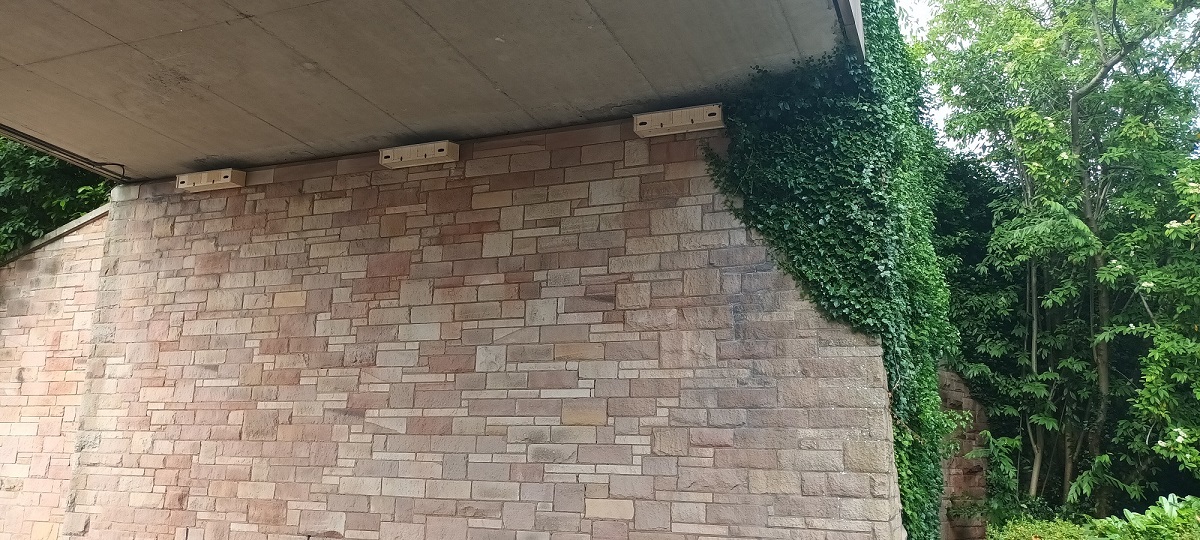
Swifts are a summer visitor, arriving back in the UK to nest in our towns and villages. Established pairs return to the same nest every year, establishing colonies that can last for centuries. In common with several other migratory bird species breeding numbers of swifts have declined across the UK by over 60% over the last 25 years. In contrast to other species, however, one major factor causing Swift decline appears to be the ongoing loss of suitable nest sites as building repair, renovation and replacement gradually results in the loss of access holes to their nest sites within the fabric of buildings.
Swift facts
- Swifts are the fastest of all birds in level flight, reaching close to 70mph
- Swifts rarely land – they only land on buildings to nest for a few weeks a year
- Swifts have one of the longest migration journeys in the world